
EU PPWR is live: what your plastic cap supplier needs to provide — and what brands must know before 2030


PPWR packaging compliance for plastic caps starts with treating the closure as part of the complete packaging unit. Regulation (EU) 2025/40 applies from 12 August 2026 and covers packaging components such as caps, lids, and dispensing closures.
That means PPWR plastic packaging requirements matter even when a cap is manufactured outside the EU. If the finished product is placed on the EU market, the brand, packaging manufacturer, importer, and supplier need clearly assigned documentation responsibilities.
This guide explains which PPWR supplier documents to request, how PPWR caps and closures affect the technical file, and which material decisions to prepare for before 2030.
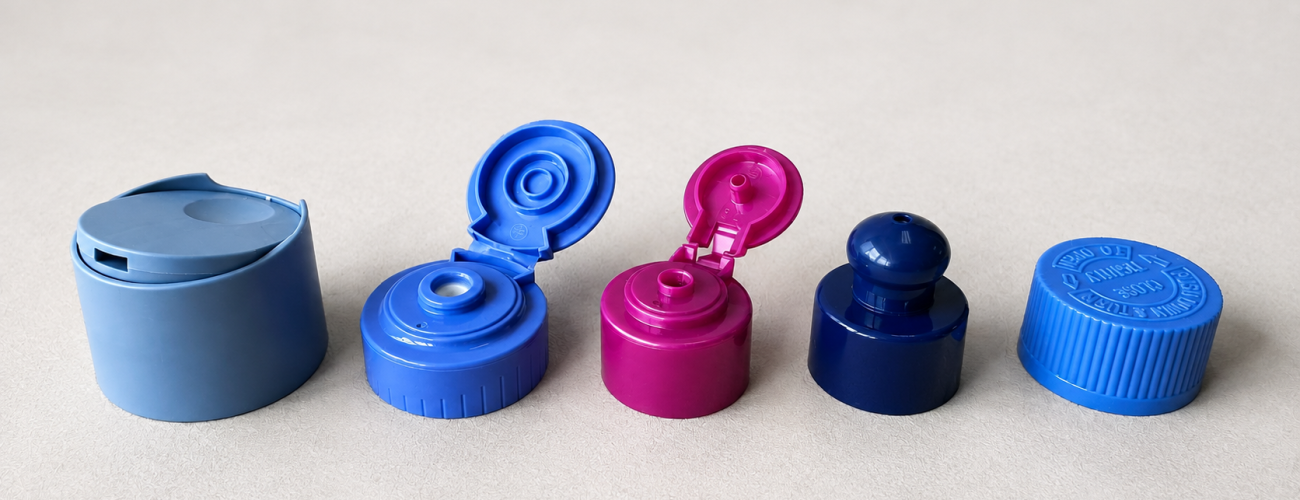
Flip top, disc top, push pull, and screw caps are all in scope as packaging components under PPWR (EU) 2025/40 — regardless of where in the world they are manufactured or sold.
PPWR packaging compliance: why plastic caps are in scope
PPWR defines packaging as any material used to contain, protect, handle, deliver, or present products — and explicitly includes packaging components such as caps, lids, dispensing closures, and pump heads as part of the regulated packaging unit. Your flip top cap, disc top, push pull, or screw cap is not peripheral to PPWR compliance. It is part of it.
The closure contributes to the substance profile of the packaging unit, affects its recyclability grade, and — from 2030 — is part of the recycled content calculation. A brand that ignores its cap when building its PPWR compliance picture is leaving a gap in its technical documentation.
Who is the “manufacturer” under PPWR — and where does the cap supplier fit?
Under PPWR, the “manufacturer” is typically whoever puts their brand or trademark on the packaging and places it on the EU market — usually the product brand or filler, not the component supplier. This means the obligation to sign the Declaration of Conformity sits with the brand, not with HB Packaging.
But the brand cannot complete that document without data from their cap supplier. Material composition, substance test results, and recyclability information must come from the factory that made the cap. This is the practical gap that most brands have not yet addressed — and the main reason this post exists.
What changed on August 12, 2026 — the obligations that apply now
Not everything in PPWR lands at once. Three obligations are live today. The larger material and design requirements come in stages through 2030 and beyond.
What’s Live Now
Substance restrictions (Article 5)
All packaging components including caps must meet a combined heavy metal limit. Lead, cadmium, mercury, and hexavalent chromium together must not exceed 100mg/kg. For food-contact packaging, PFAS limits also apply: 25ppb per individual PFAS, 250ppb for total PFAS sum.
Note: the PFAS restriction applies to food-contact formats — not to cosmetics or personal care, though confirming your cap supplier's status is good practice regardless.
What’s Coming
Aug 2026
2027 - 2028
2030
2038 - 2040
The 2030 requirements may feel distant, but product development cycles run 18–36 months. Cap formats being specified today will still be in production and on EU shelves when the 2030 rules take effect. The decisions made now determine compliance then.
The 5 things to request from your cap supplier right now
Your Declaration of Conformity is only as strong as the documentation behind it. Most of that documentation — particularly for a plastic closure — must come from the component supplier. Here is exactly what to ask for, and why each item matters.
Documentation Checklist (what your cap supplier needs to provide)
Material composition declaration
The exact polymer type (PP, LDPE, HDPE, and so on), additive content, and colorant formulation for every component of the cap. This is the foundation of your technical documentation file. Without it, you cannot assess substance compliance, recyclability, or recycled content.
Heavy metal test certificate
A test report confirming the combined concentration of lead, cadmium, mercury, and hexavalent chromium is below 100mg/kg in the cap material. ISO-certified manufacturers should already have this. If your supplier cannot provide it, that is a compliance risk that needs to be addressed before further orders.
PFAS status statement Food contact only
For caps used on food-contact packaging — condiments, beverages, food supplements — request a declaration confirming PFAS content is below the Article 5 thresholds: 25ppb per individual substance, 250ppb for the total sum. For cosmetics and personal care applications, the food-contact PFAS limits do not technically apply. Requesting the statement regardless costs nothing and strengthens your technical file.
Recyclability information
Is the cap mono-material? What polymer type does it use, and which recycling stream does it enter? A mono-material PP flip top cap enters the polypropylene stream cleanly. A bi-color two-resin cap, a cap with a metal insert, or a vacuum-metallised surface finish introduces complexity that affects the recyclability grade assessment ahead of 2030. You need to know this now, not in 2029.
ISO and QC certifications
ISO 9001:2015 confirms documented production controls and consistent quality management. ISO 14001 confirms environmental management systems are in place. Both support the technical documentation file required alongside the DoC. A supplier without either should be asked how they demonstrate process consistency.
HB Packaging holds ISO 9001:2015 and ISO 14001 certifications, and can provide material composition declarations and heavy metal test data for any cap in our range. Contact us to request documentation for your current or upcoming order.
Which cap types are best positioned for PPWR?
Not all plastic caps are equally positioned for PPWR’s recyclability requirements, which take effect from 2030. The key variable is whether the cap is mono-material — made from a single polymer type that enters one recycling stream without contamination.
WELL POSITIONED
Mono-material PP or PE caps
Standard flip top caps · disc top caps · push pull caps · screw caps — all in single-polymer PP or LDPE/HDPE
REVIEW NOW
Multi-material caps
Bi-color two-resin constructions · vacuum-metallised finishes · metal insert closures · caps with integrated spring mechanisms
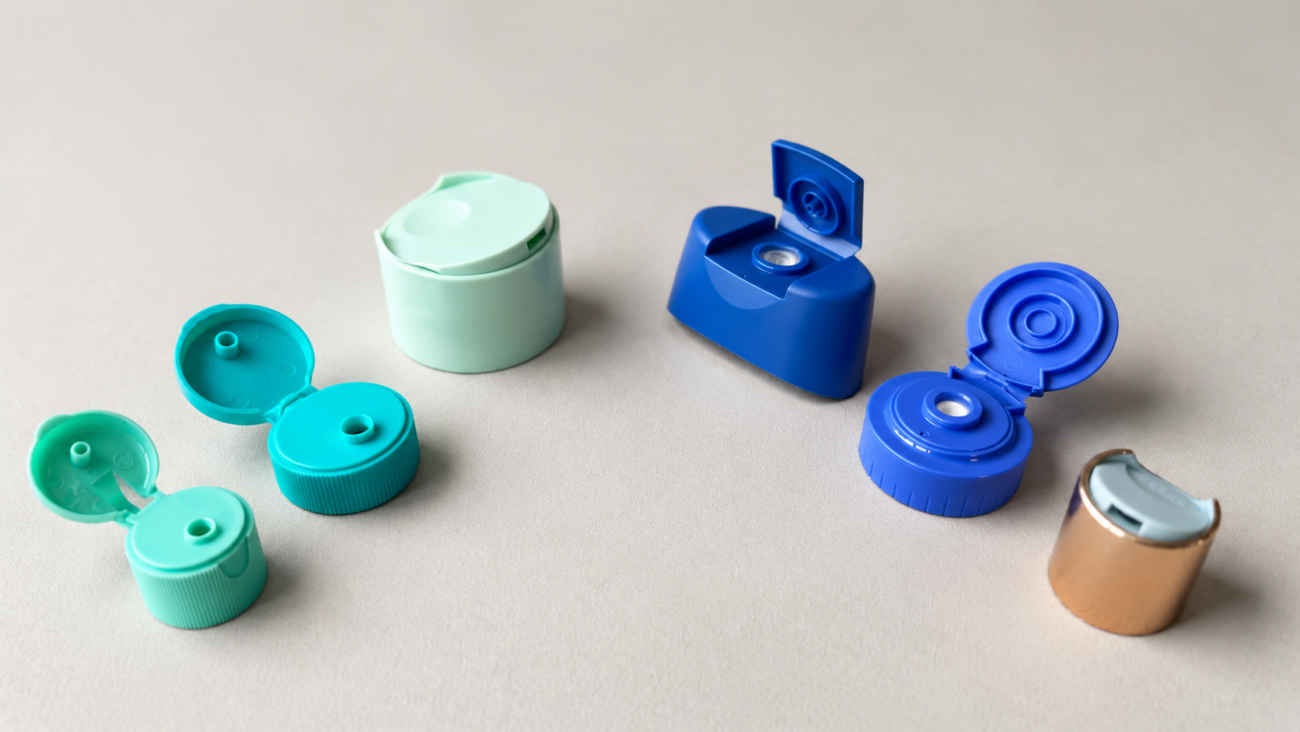
Left: mono-material PP caps enter a single recycling stream cleanly.
Right: bi-colour and mixed-material constructions may score lower under PPWR’s 2030 recyclability grade framework.
Multi-material caps are not banned under PPWR today. But under the recyclability grade framework that takes effect in 2030, packaging that cannot enter a single recycling stream without contamination risks scoring a lower grade. Grade C (≥70% recovery rate) is the 2030 minimum — and grade C is itself phased out by 2038. Only grades A (≥95%) and B (≥80%) are permitted long-term.
A note on silicone caps
Silicone is not recyclable through standard plastic streams. Recyclability assessment for silicone packaging components is more complex and will depend on the sector-specific guidance that emerges before 2030. If you use silicone closures on products sold into the EU, raise this specifically with your supplier and begin tracking the delegated acts as they are published.
Not sure which cap format to specify? Our flip top vs. disc top vs. push pull guide covers cap type selection by viscosity, use context, and brand positioning — a useful starting point before making format decisions for EU-market products.
What’s coming in 2030 — design decisions to make now
PPWR’s most consequential material requirements do not take effect until 2030. But product development cycles run 18 to 36 months. The cap formats being specified now will still be on EU shelves when the 2030 rules arrive — and switching under time pressure is significantly more expensive than switching now.
Minimum recycled content in plastic packaging (Article 7)
From January 1, 2030, plastic packaging must contain a minimum proportion of post-consumer recycled (PCR) content, calculated from plastic waste collected after consumer use. The targets depend on the packaging type:
| Packaging type | From 2030 | From 2040 |
|---|---|---|
| Contact-sensitive plastic (cosmetics, food-adjacent) | 10% PCR | 25% PCR |
| Contact-sensitive PET packaging | 30% PCR | 50% PCR |
| Other plastic packaging (non-contact) | 35% PCR | 65% PCR |

Post-consumer recycled (PCR) polypropylene pellets — the raw material used to meet PPWR’s minimum recycled content targets from 2030. Certified PCR PP is available; supplier conversations should begin now.
For a PP flip top cap used on a shampoo bottle (contact-sensitive), the 2030 target is 10% PCR content. For a PP cap used on a household cleaning product (non-contact), the target is 35%. Certified PCR polypropylene material is available in the supply chain — but planning ahead matters. Sourcing, testing, and certifying PCR-content caps takes time.
Note: a plastic component that represents less than 5% of the total weight of the complete packaging unit may be excluded from the minimum recycled content calculation. For a small cap on a large bottle, this exception may apply — but it must be documented with weight calculations per packaging unit.
A note on US brands — Does PPWR apply to you?

PPWR applies based on where the product is sold, not where the brand is based. US brands selling packaged goods into the EU are in scope from August 12, 2026 — regardless of where the caps are manufactured.
PPWR applies according to where packaging is placed on the market, not simply where the company is incorporated. A non-EU brand selling packaged products in the EU should identify which economic operator—manufacturer, importer, or authorised representative—performs each applicable task.
Article 17 says that a manufacturer may appoint an EU-established authorised representative by written mandate; it does not state that every non-EU manufacturer is automatically forbidden from signing the declaration. The mandate may cover keeping the EU declaration of conformity and technical documentation available to authorities, but the manufacturer’s core conformity obligations and responsibility for drawing up the technical documentation remain with the manufacturer.
Extended producer responsibility uses a separate authorised-representative concept, and registration requirements can differ between Member States. Confirm the correct structure for your route to market with qualified EU regulatory counsel.
HB Packaging can provide the component-level material information and supporting documentation required from a packaging supplier. The legal allocation of manufacturer, importer, authorised-representative, and EPR responsibilities should be documented separately for the complete packaging placed on the EU market.
Conclusion: three things to do before the end of the month
PPWR is not a single deadline — it is a phased regulation running from 2026 to 2040. The obligations live today are documentation and substance compliance. The obligations arriving in 2030 are material and design requirements that need to be addressed in your product development cycle now.
If you are a US brand selling into Europe
If you are a US brand selling packaged products into the EU, determine which entity in your supply chain qualifies as the manufacturer responsible for the EU Declaration of Conformity, and identify the importer and any authorised representative appointed under Article 17. Separately, check whether an EPR authorised representative is required in each Member State where your products are placed on the market.
Frequently Asked Questions
Q Does PPWR apply to plastic bottle caps?
Q What documents should I request from my plastic cap supplier for PPWR compliance?
Q Does PPWR apply to US brands selling products in Europe?
Q What are the PPWR recycled content requirements for plastic caps from 2030?
Q Which cap types are best positioned for PPWR recyclability requirements?
Request PPWR documentation for your cap order
HB Packaging can provide material composition declarations, heavy metal test data, and ISO certifications for any cap in our range to support your Declaration of Conformity. If you are reviewing your cap spec for PPWR compliance or evaluating mono-material alternatives, get in touch — we will provide documentation and, if needed, samples for testing.
Catch the packaging decisions your competitors are already making.
One practical brief each month on closure specs, compliance shifts and sourcing mistakes, before they turn into samples you have to redo.