
Bottle cap liner guide: which liner does your cap need, and when can you skip one?

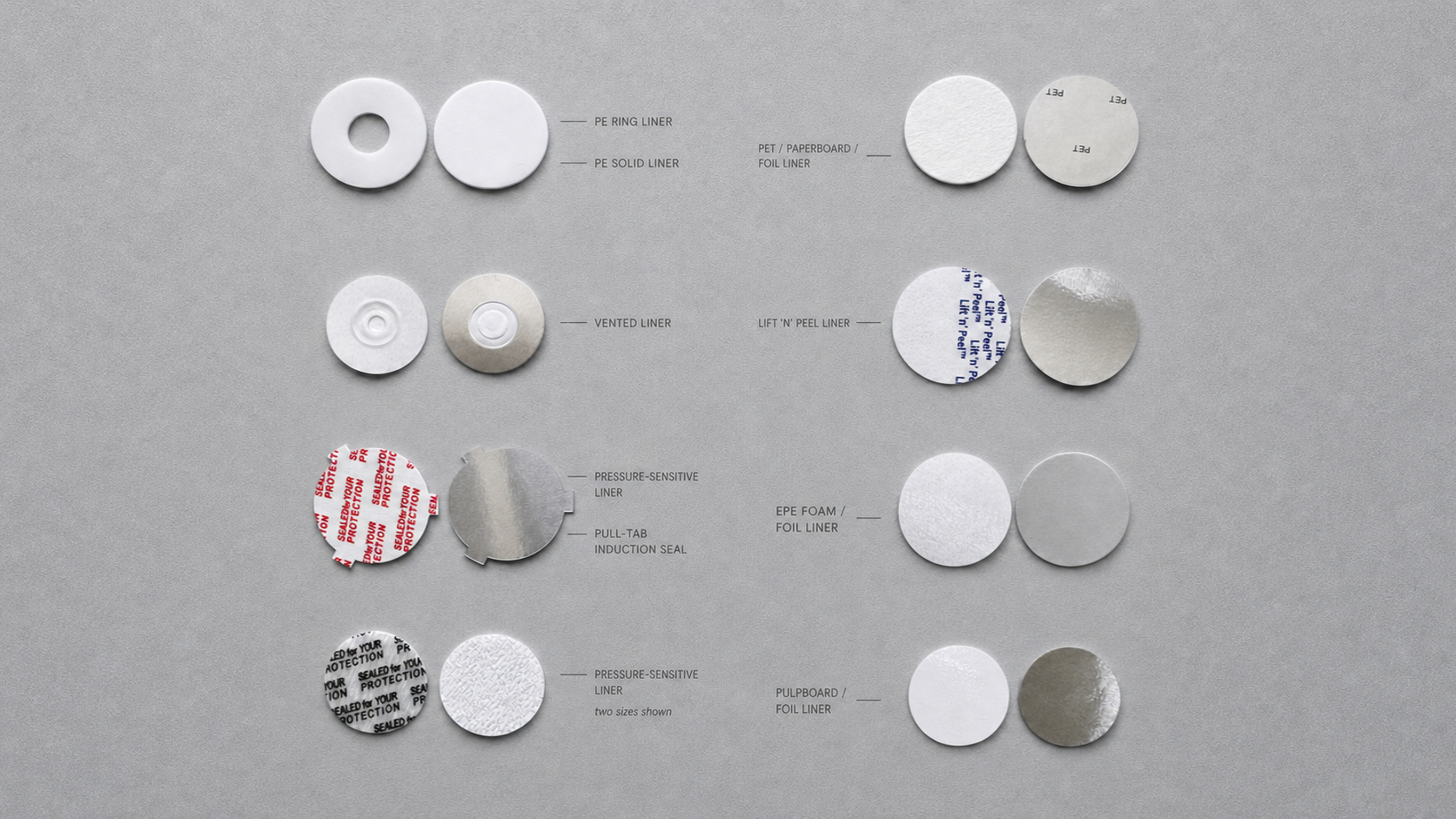
A showcase of all types of main bottle cap liners. Each delivers a different level of seal and tamper protection.
This bottle cap liner guide compares PE foam liner, induction foil liner, double liner, and pressure-sensitive liner options—and explains when a cap may not need a liner at all. A liner creates the primary seal between the cap and bottle mouth, helps prevent leakage in transit, and can provide tamper evidence for applicable products.
Specify the wrong liner and you risk leakage complaints, failed shelf-life testing, or a closure system that does not meet the product’s requirements. The right choice depends on the cap type, formula, filling equipment, target market, and distribution conditions.
For U.S. over-the-counter drugs, review the FDA tamper-evident packaging requirements in 21 CFR 211.132 and confirm the complete package with a qualified regulatory specialist.
What does a bottle cap liner do?
Primary seal
Fills the gap between the cap interior and the bottle neck. Without it, even a well-threaded screw cap can allow liquid to seep through under pressure or temperature change.
Tamper evidence
Aluminum foil liners bond to the bottle mouth. Once sealed, the foil cannot be removed without visible breakage. It serves a clear first-open indicator for consumers and retailers.
Freshness & barrier
Foil liners create a hermetic barrier against oxygen, moisture, and vapour, which is essential for volatile fragrances, oxidation-sensitive formulas, and products with long shelf lives.
Regulatory compliance
For child-resistant caps, a liner is not optional, it is part of the certified closure system. Omitting or substituting it can invalidate the child-resistant certification.
Bottle cap liner guide: PE foam, foil, double, and pressure-sensitive types
TYPE 1
PE foam liner
Soft polyethylene disc. Compresses against the bottle mouth for a basic reliable seal. No tamper evidence. Low cost. Default liner for screw caps and nozzle caps.
Default for screw & nozzle caps
TYPE 2
Aluminum foil liner
Bonds to bottle mouth via heat induction or pressure. Hermetic seal plus tamper evidence. Requires induction sealing equipment at the filling stage.
Recommended for thin / water-based formulas
TYPE 3
PE + aluminium foil (double liner)
Two layers: PE foam on cap side, foil facing bottle mouth. Creates hermetic barrier with tamper evidence while providing a re-seal surface after first opening.
Maximum protection for sensitive formulas
TYPE 4
Pressure-sensitive liner (PSL)
Adheres on contact without heat induction. Available as cardboard + foil composite for pharmaceutical and CRC applications. No induction sealer required.
CRC and pharma formats; no induction sealer
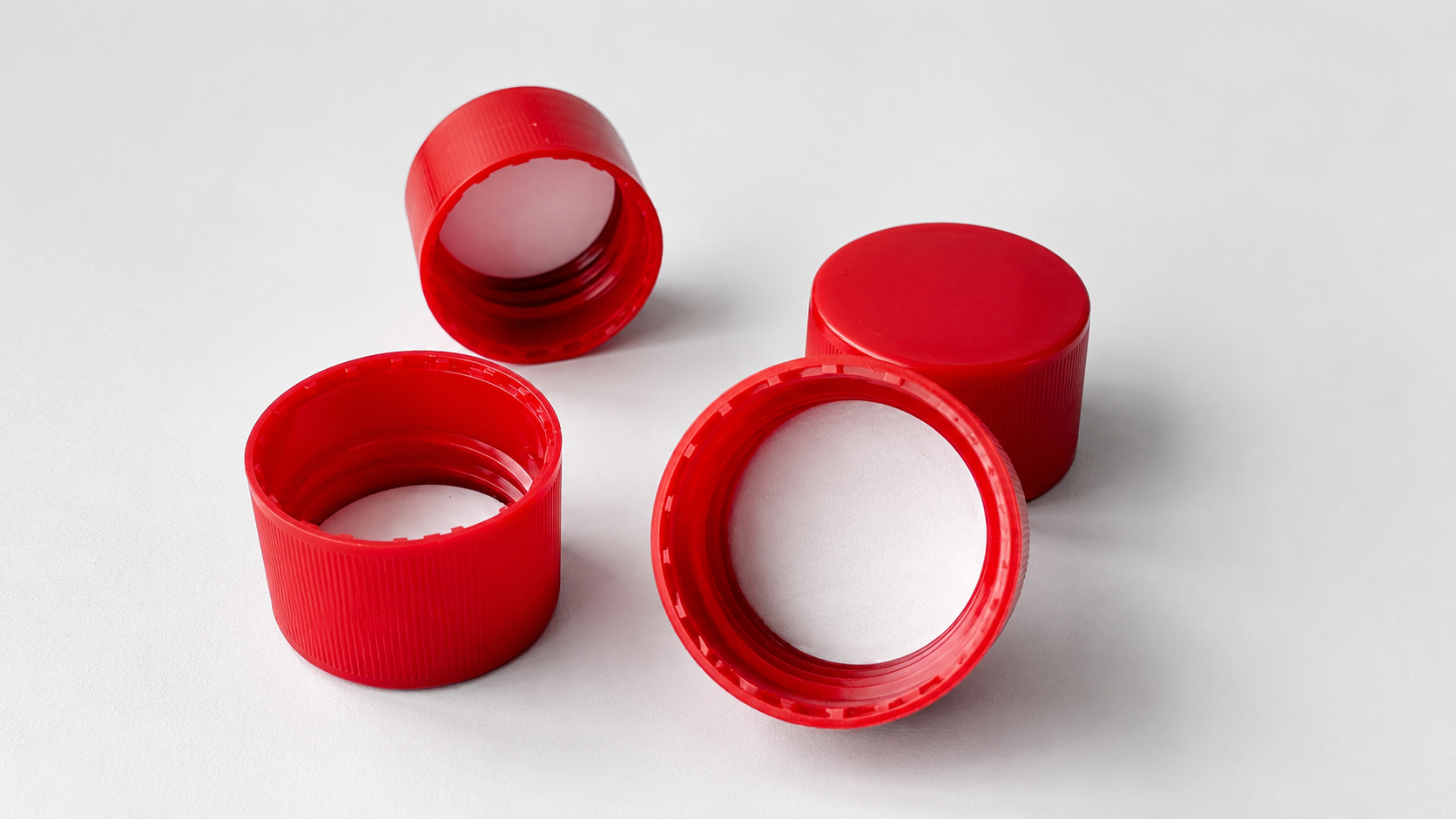
A PE foam liner (white disc) sits inside the screw cap and compresses against the bottle mouth when tightened, creating a contact seal. This is the most common bottle cap liner type across personal care and food packaging.
Do you need a liner? Three questions that determine your choice
What type of formula are you filling?
Thin, water-based liquids, such as toners, serums, liquid soaps, sauces, are most likely to leak and should always have a liner. Thick creams and gels are more forgiving. Dry products generally do not require one, though tamper evidence requirements may still apply.
Does your product require tamper evidence?
Food, pharmaceutical, nutraceutical, and personal care products sold in US or EU retail channels often require tamper-evident packaging by regulation or retailer requirement. An aluminum foil liner is the standard way to deliver tamper evidence at the closure level.
Which cap type needs which liner? Here’s a complete reference guide
The table maps every major cap type to its liner requirement. Click any row in the expandable guide below for details and the category link.
| Cap type | Liner needed? | Default liner | Upgrade option |
|---|---|---|---|
| Disc top cap | Optional | — | Foil liner (water-based) |
| Flip top cap | Optional | — | Foil liner (water-based) |
| Push pull cap | Not needed | — | — |
| Screw cap | Standard | PE foam liner | PE + foil liner |
| Nozzle cap | Standard | PE foam liner | PE + foil (sensitive) |
| Silicone cap | Optional | — | Foil liner |
| TPE cap | Not needed | — | — |
| Bi-color cap | Not needed | — | — |
| Tamper-evident cap | Not needed | — | — |
| CRC cap | Required | PE liner | PE+foil · PSL · cardboard+foil |
Standard = included by default · Optional = available on request · Required = mandatory for compliance
Not sure which cap you need?
Disc top cap Optional
The press-disc mechanism provides a functional seal but is insufficient for thin or low-viscosity liquids. For facial toners, light serums, or similar products, add an aluminium foil liner at the bottle mouth. For thick lotions and creams, a liner is optional — assess based on formula viscosity and transit conditions.
Liner recommendation: aluminium foil liner for water-based or thin formulas · none for thick creams
View Q Series disc top caps →Flip top cap Optional
The snap-hinge closure provides a reliable everyday seal but does not form a hermetic barrier. For shampoos, conditioners, and thin liquids, add an aluminium foil liner at the bottle mouth. For thick creams or pastes the liner is optional. It sits at the bottle mouth independently and does not interfere with the hinge mechanism.
Liner recommendation: aluminium foil liner for water-based or thin formulas · none for thick formulas
View T Series flip top caps →Push pull cap Not needed
The two-position nozzle seals tightly when pushed down — sufficient for the thin to medium viscosity liquids this cap is designed for. A liner is not standard and not recommended: it can interfere with the nozzle mechanism and dispensing performance.
View S Series push pull caps →Screw cap PE liner standard
A PE foam liner is included as standard and compresses against the bottle mouth when tightened — reliable across most liquid and semi-liquid applications. For water-based formulas or products requiring tamper evidence, upgrade to a PE + aluminium foil liner. Specify this at the RFQ stage, not after samples are approved.
Default: PE foam liner · Upgrade: PE + foil for water-based formulas or tamper evidence requirements
View screw cap range →Nozzle cap PE liner standard
PE foam liner is included as standard. For thinner liquids, volatile formulas, or applications where tamper evidence is required — condiments, liquid supplements, cleaning concentrates — upgrade to a PE + foil double liner. The foil seals the bottle mouth at first fill; the PE layer maintains a re-seal surface after the foil is broken.
Default: PE foam liner · Upgrade: PE + foil for sensitive or food-contact applications
View nozzle cap range →Silicone cap Optional
Silicone caps conform closely to the bottle neck, providing natural sealing. A liner is not required in most applications. For pharmaceutical closures or applications where contamination prevention or tamper evidence is needed, one aluminium foil liner is typically added at the bottle mouth.
Liner recommendation: none for standard use · aluminium foil liner for pharmaceutical or tamper-evident requirements
View silicone cap range →TPE cap Not needed
TPE material compresses and conforms to the bottle neck opening, providing a self-sealing contact without an additional insert. No liner is needed or recommended for standard TPE cap applications.
View TPE cap range →Bi-color cap Not needed
Bi-color caps are primarily aesthetic closures — the sealing function is provided by the cap's contact surface with the bottle mouth. No liner is required as standard. If a specific formula or transit condition demands additional sealing, discuss this with your supplier for a case-specific assessment.
View bi-color cap range →Tamper-evident cap Not needed
Tamper evidence is built into the cap design — a breakaway band, tear ring, or ratchet mechanism that shows visible signs of first opening. An additional liner is not part of the standard construction and is generally not required.
View tamper-evident cap range →CRC cap (child-resistant) Required
A liner is mandatory — it is part of the certified child-resistant mechanism and cannot be omitted or substituted without re-testing and re-certification. Four configurations are available depending on product category and filling equipment:
Specify liner type at RFQ stage — it affects unit cost and filling line requirements.
View CRC cap range →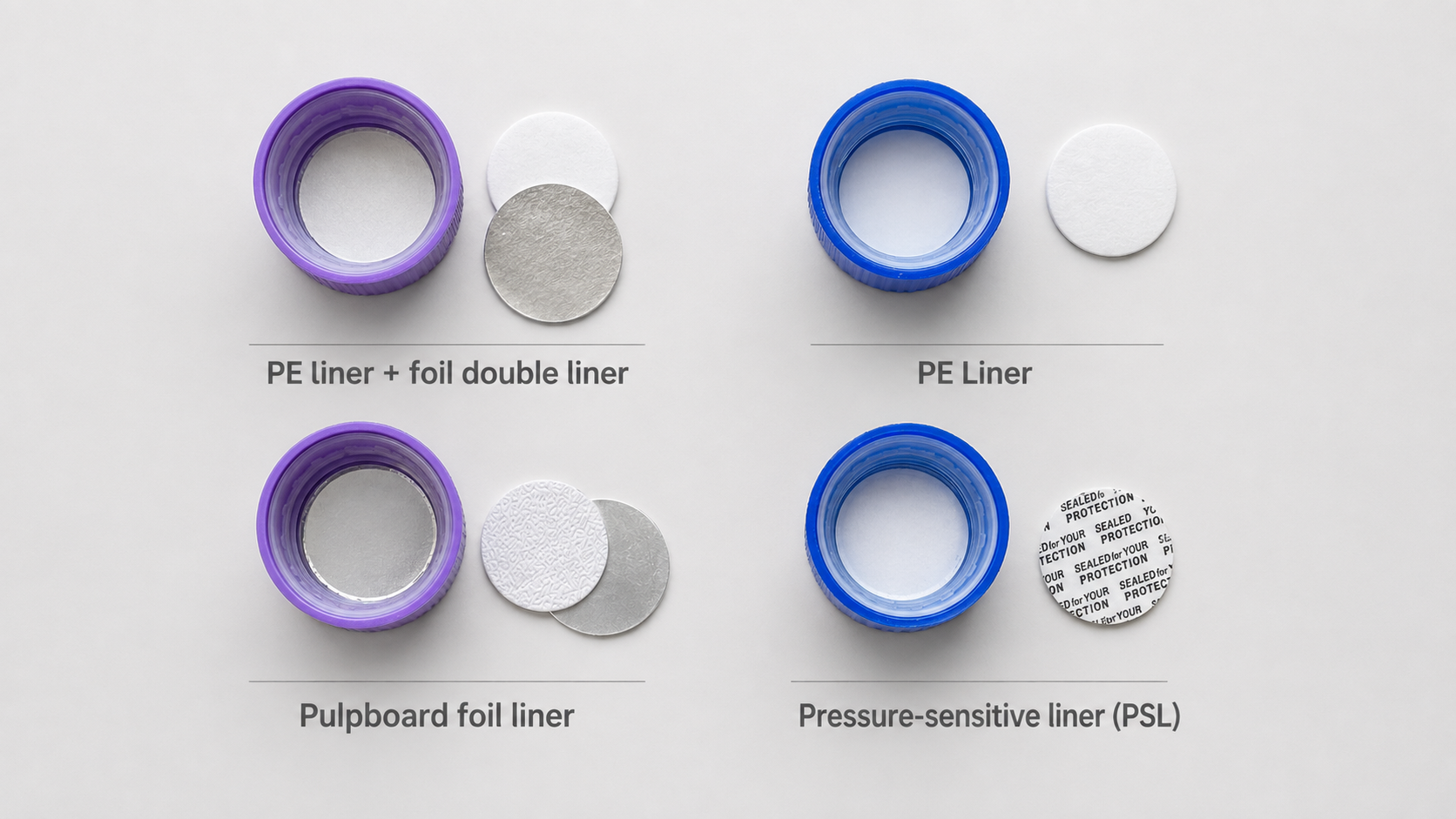
CRC cap liner options: PE liner, PE liner + foil double liner, pulpboard foil composite liner, and pressure-sensitive liner (PSL).
Specify your child resistant cap liner type at the RFQ stage — it affects unit cost and filling line requirements.
How to specify a bottle cap liner when ordering
Liner specification is not automatic. Most suppliers include a default liner — or no liner — unless you specify otherwise at the enquiry stage.
Tell your supplier at RFQ stage
- Cap type and neck size — confirms liner dimensions and compatible formats
- Formula type — water-based, oil-based, thick/viscous, or dry. This is the primary driver of liner recommendation
- Tamper evidence requirement — if yes, specify a foil liner regardless of cap type
- Induction sealing equipment — aluminum foil liners require an induction sealer at the filling stage. If unavailable, specify PSL instead
- Target market and regulatory context — pharmaceutical, food, and EU/US retail channels may require specific liner formats beyond the standard offering
Always request samples with the liner fitted. Seal performance can only be verified against your actual bottle and formula under real fill conditions.
Frequently asked questions about bottle cap liners
Q Does a flip top cap need a liner?
Q What liner does a screw cap come with?
Q Does a CRC cap (child-resistant cap) need a liner?
Q What is the difference between a PE liner and a foil liner?
Q Do I need induction sealing equipment to use a foil liner?
Conclusion
The correct bottle cap liner is determined by three things: the cap type, the formula, and the filling and distribution context. A PE foam liner suits most screw cap and nozzle cap applications. An aluminum foil liner, or PE + foil double liner, is the right choice for water-based formulas or where tamper evidence is required. And for CRC caps, a liner is non-negotiable.
Push pull, TPE, bi-color, and tamper-evident caps generally do not need a liner. For everything else, use the reference guide above and confirm your choice with your supplier at the RFQ stage before sampling.
Not sure which liner to specify?
Tell us your cap type, bottle neck size, and what you are filling. We will confirm the correct bottle cap liner, include it in your sample order, and advise on any filling equipment requirements before production.
Catch the packaging decisions your competitors are already making.
One practical brief each month on closure specs, compliance shifts and sourcing mistakes, before they turn into samples you have to redo.