Custom Bottle Caps: 7 Decisions to Make Before Paying for a Mold

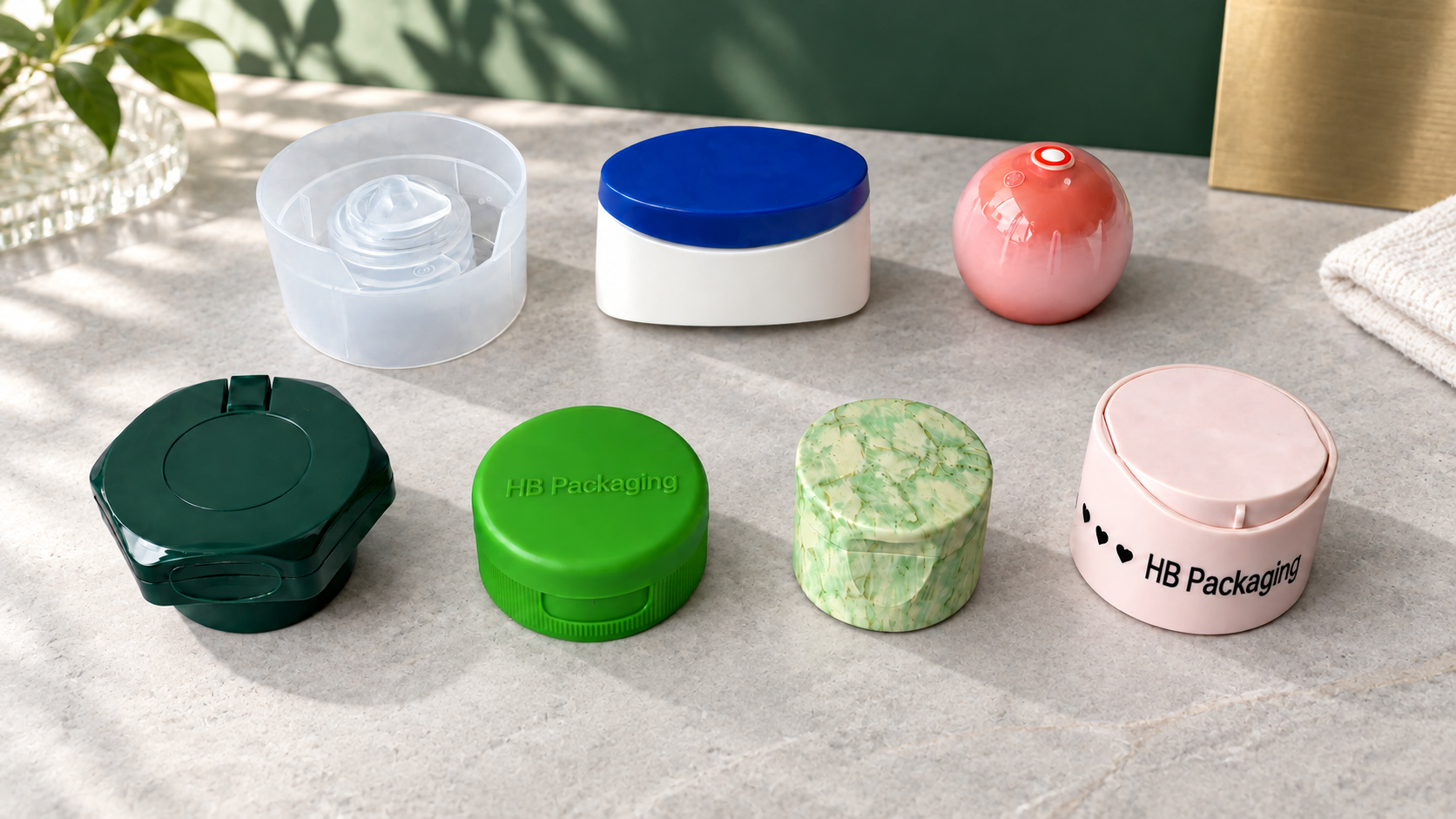
Custom bottle caps can make a package easier to use, more recognizable, or better matched to a specific formula. They also create a tooling commitment that is difficult to undo after steel is cut. The safest approach is to convert every design preference into a measurable requirement before approving a mold.
That discipline matters in a fast-moving beauty market. NielsenIQ reported that independent beauty brands reached $40 billion in annual sales and grew dollar sales 22.3% year over year, compared with 6.1% for beauty conglomerates. Growth creates opportunity, but it also increases the cost of a delayed launch or a closure that has not been validated with the final bottle and formula.
This guide explains seven decisions to make before paying for a mold. It does not prescribe one closure or material for every product. Your converter, bottle supplier, contract manufacturer, filler, and testing partners should confirm the final package as a complete system.
When Do Custom Bottle Caps Justify a New Mold?
First decide what “custom” needs to mean. A stock closure in a custom color may already deliver strong shelf consistency. An existing mold with a different surface finish, color combination, or compatible decoration can go further. A completely new mold is most defensible when a required function, geometry, bottle interface, or brand feature cannot be achieved reliably with an existing platform.
| Route | What changes | Best fit | Main question |
|---|---|---|---|
| Stock closure | Standard geometry and available color | Early launches, test runs, simple requirements | Is a compatible sample available for testing? |
| Customized existing platform | Color, finish, decoration, or approved component combination | Brands that need distinction without new core geometry | Which options use existing tooling, and what must be revalidated? |
| New mold | Part geometry, interface, dispensing feature, or construction | Requirements that existing designs cannot meet | Is the business case strong enough to justify tooling and validation? |
Do not assume a new mold is necessary because a reference cap looks unique. Ask the manufacturer to search its existing library first. HB Packaging lists broad flip-top cap and disc-top cap ranges; an established platform may offer a faster, lower-risk starting point when it fits the bottle and product requirements.
Decide Whether an Existing Mold Can Do the Job
For custom bottle caps, write down the one or two reasons the package must be custom. A defensible reason might be a proprietary silhouette, a controlled dispensing feature, a component arrangement, or a geometry required by the bottle. “We want it to feel premium” is useful direction, but it is not yet an engineering requirement.
Compare three routes with the same brief: an existing cap, a modified existing platform, and new tooling. Request physical samples for any existing candidate. A catalog dimension or rendering cannot show how the hinge feels, how cleanly the product dispenses, or how the assembled pack behaves during distribution.
Questions to answer:
- Which required feature is unavailable in a current platform?
- Could custom color or decoration create enough distinction?
- Will the design remain useful across more than one SKU or launch?
- Does the expected volume support the tooling commitment?
Define the Closure’s Job Before Its Shape
Before discussing the appearance of custom bottle caps, describe what the closure must do. Identify the product category, formula format, expected dispensing behavior, opening method, storage orientation, target user, channel, and distribution conditions. A closure for a low-viscosity scalp serum has a different job from a cap used with a dense hair mask, even if both packages share a brand identity.
Packaging is also part of product protection. The US Food and Drug Administration identifies packaging that does not adequately protect a cosmetic as one possible route to microbiological contamination. That does not mean a cap alone determines microbiological safety. It means the complete package, product, manufacturing process, and intended use must be evaluated together.
Turn the use case into observable outcomes. For example: product should dispense without uncontrolled streaming; the lid should remain closed through the agreed distribution test; the consumer should be able to open it with the intended grip; and residue should not prevent the closure from functioning over the target use period. The appropriate test methods and acceptance limits need to be agreed by the responsible technical teams.
Lock the Bottle Interface and Critical Dimensions
A nominal diameter is not a complete fit specification. The bottle finish, thread profile, sealing surface, land, wall geometry, liner or plug arrangement, and application process all influence the assembled package. Two finishes with a similar name should not be treated as interchangeable without drawings and fit testing.
Provide an approved bottle drawing and physical bottle samples whenever possible. Confirm who owns the bottle specification and which revision controls the project. If the bottle and custom bottle caps come from different suppliers, name the party responsible for coordinating drawings, tolerances, samples, and assembly trials.
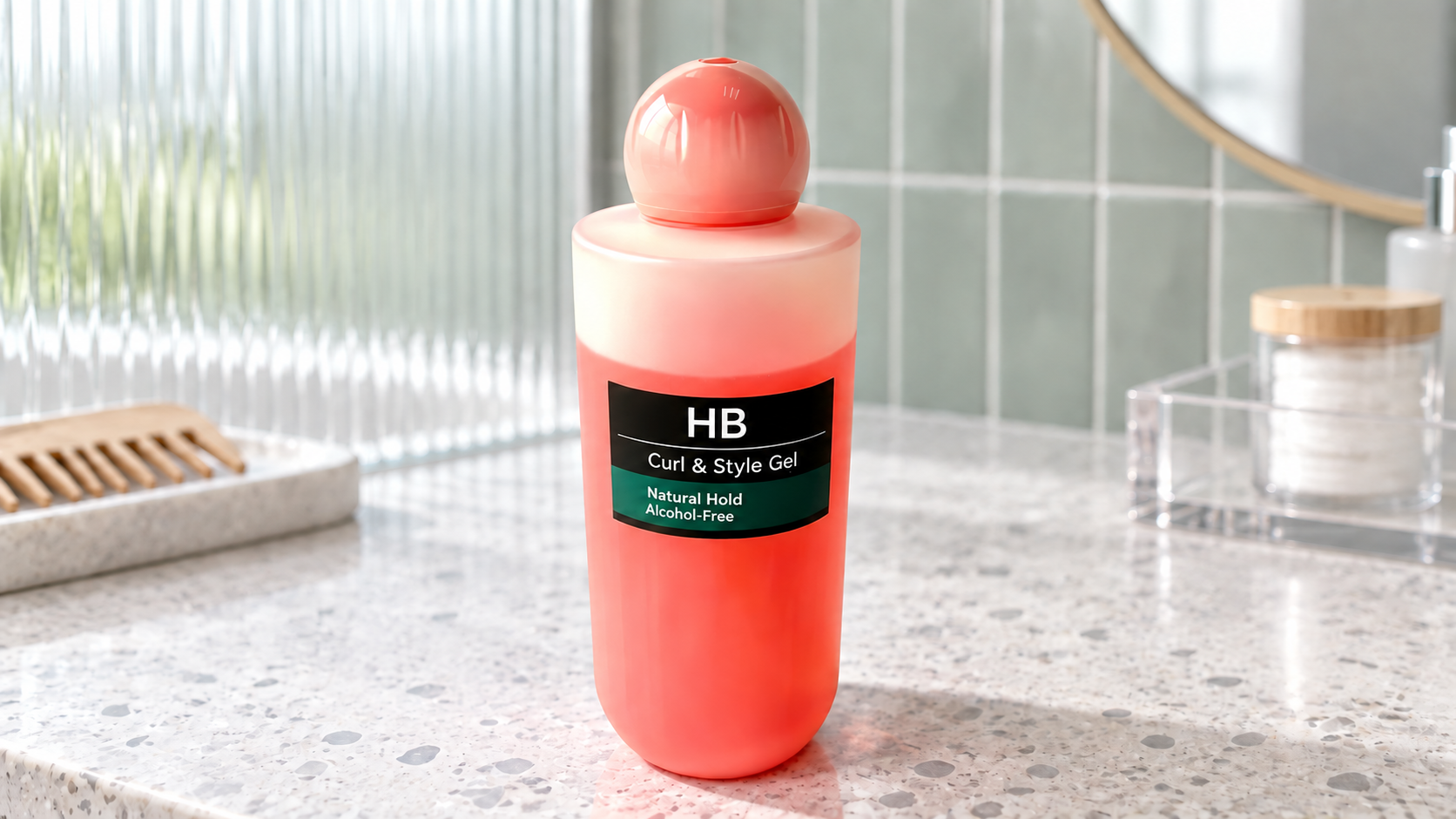
Application torque, removal torque, sealing performance, and line handling can be affected by the bottle, closure, equipment, and process settings. Set target ranges only after the relevant suppliers and filler review the system. If you are still choosing a dispensing format, compare the functional differences in HB Packaging’s flip-top, disc-top, and push-pull cap guide, then validate the selected option with your actual pack.
Choose Materials and Construction as a System
Material selection for custom bottle caps affects molding, feel, component flexibility, decoration, color, recycling considerations, and interaction with the formula. Common resin names are not enough to approve production. Ask for the exact material grade proposed for every component and confirm whether colorants, additives, liners, seals, or soft-touch elements are included.
Do not accept a broad statement such as “PP is compatible” as proof for your finished product. Compatibility depends on the specific formulation, resin grade, exposure, temperature, time, and package construction. Use filled-package testing under conditions defined by your technical team, and document what counts as an acceptable result.
For a multi-component or bi-color design, ask how the components are joined and separated, whether any material combination affects the intended disposal route, and what variation is acceptable at color boundaries. If recycled content is requested, specify the target component, percentage basis, appearance expectations, documentation, and testing plan. Avoid environmental claims until the complete package and the intended market claim have been reviewed.
Specify the User Experience in Measurable Terms
The user experience of custom bottle caps cannot be defined by words such as “luxury,” “soft,” “tight,” or “easy to open” alone. These terms can guide design, but they need measurable acceptance criteria before tooling approval. Create a reference set showing what the team accepts and rejects. Define visual boundaries for gloss, texture, parting lines, gate marks, color, and any decoration.
Then describe the interaction sequence. How will the consumer grip the cap? Is one-handed opening important? Must the lid provide audible or tactile feedback? How much product should be exposed or dispensed? Will residue collect around the orifice? These questions help the engineer choose geometry without guessing what the brand means.
Review accessibility with representative users when it is relevant to the target market. A sample that feels acceptable to a design team may perform differently for consumers with wet hands, long nails, limited grip strength, or reduced dexterity. Record the participant profile and evaluation method rather than converting informal feedback into an unsupported universal claim.
Model the Full Economics, Not Only the Mold Quote
The mold price is only one line in the business case for custom bottle caps. Request a quotation that separates tooling, unit price, sampling, color or decoration, testing, packaging, freight terms, and any later modifications. Confirm which taxes, duties, logistics services, and third-party costs are outside the quotation.
This simple calculation is a planning aid, not a complete cost model. Forecast volume may change, and unit economics also depend on cavity strategy, material, cycle, scrap, decoration, packing, and commercial terms. Run conservative, expected, and high-volume scenarios instead of using one optimistic forecast.
Ask for the production MOQ by part, color, and order, plus the sample policy and any quantity needed for validation. Search phrases such as “minimum order plastic caps” or “free sample cap manufacturer” can suggest an easy answer, but the real requirement depends on the project. A small sample shipment is not evidence that production can run economically at the same quantity.
Also decide whether the tool can serve a family of products. One shared cap geometry across several formulas may improve the business case, provided every bottle and formula combination is tested. Avoid assuming that a cap validated on one SKU is automatically approved for another.

Agree on Validation, Changes, Ownership, and Maintenance
Before paying a deposit for custom bottle caps, put the approval path in writing. Identify the drawings that require sign-off, the sample stages, the test responsibilities, the number and scope of included changes, and the event that authorizes production. Define what happens when a result falls outside the agreed limit.
Testing should be risk-based and product-specific. Depending on the pack and use case, the plan may consider dimensional inspection, visual criteria, fit, torque, leakage, dispensing, drop or distribution simulation, environmental conditioning, line trials, and formula compatibility. This list is not a claim that every test is required or that HB performs every test in-house. The brand and its qualified partners must determine the appropriate protocol.
| Agreement point | What to document before payment | Evidence to retain |
|---|---|---|
| Design control | Drawing revision, critical dimensions, material grades, color standard | Signed drawing and approved specification |
| Samples and changes | Sample stages, quantities, review period, included modifications | Approval record and change history |
| Testing | Responsible party, methods, conditions, sample size, acceptance limits | Test plan and dated reports |
| Ownership | Who owns the mold, drawings, inserts, and related intellectual property | Contract and payment record |
| Storage and maintenance | Location, preventive care, repair approval, tool-life reporting, transfer terms | Maintenance log and inventory record |
ISO management-system certification can support supplier evaluation, but it does not certify that a particular cap is suitable for your product. ISO explains that certification is performed by independent certification bodies, not by ISO itself.3 Request the supplier’s current certificate, verify its scope and issuing body, and still complete project-specific validation.
HB Packaging’s custom molding process describes its current approach to briefs, engineering, tooling, samples, mold ownership, and maintenance. Treat that page as a starting point for discussion. The signed quotation, specification, test plan, and contract should control your actual project.
Custom Bottle Caps: Pre-Tooling RFQ Checklist
A strong request for quotation reduces assumptions on both sides. Send the following information where it is available, and clearly label anything that is still provisional.
Include with the brief
- Product category, formula format, and intended use
- Approved bottle drawing, revision number, and physical samples
- Closure type, opening method, dispensing objective, and target user
- Component material and construction preferences, with exact grades left for technical review
- Color standard, finish, decoration area, and visual acceptance references
- Annual forecast, first-order scenario, number of colors, and launch schedule
- Distribution markets, filling location, storage orientation, and known logistics conditions
- Proposed validation plan, responsible parties, and acceptance criteria
- Required documentation, commercial terms, mold ownership, and maintenance expectations
If key details are unknown, ask for a design-for-manufacturing review before committing to steel. Share the actual constraints rather than requesting a copy of a competitor’s part. The goal is a manufacturable closure that the brand has the right to use and can validate for its own product.
Frequently Asked Questions
Q Do custom bottle caps always require a new mold?
Q What should be approved before mold production begins?
Q How should a brand choose a cap material?
Q Can the supplier guarantee that a cap will not leak?
Q What is the best first step with HB Packaging?
Start With the Specification, Not the Steel
Share your bottle, formula format, user requirements, visual direction, forecast, and validation expectations. HB Packaging can review existing closure platforms and discuss a custom molding route when a new design is justified.
Catch the packaging decisions your competitors are already making.
One practical brief each month on closure specs, compliance shifts and sourcing mistakes, before they turn into samples you have to redo.