
Lotion Pump Caps: 9 Specifications Beauty Brands Must Confirm

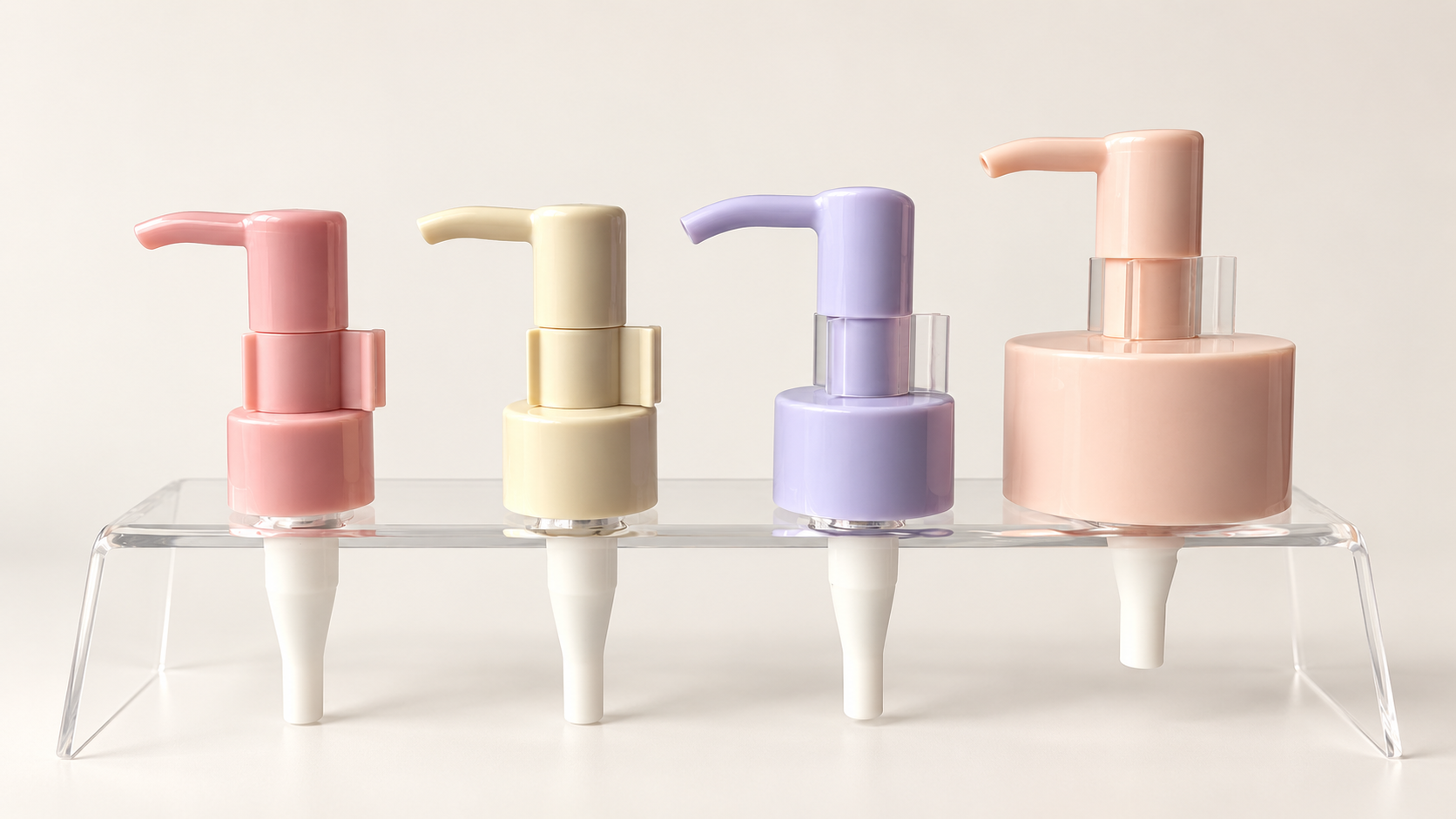
A lotion pump cap is not a single decorative component. It is a dispensing system whose collar, actuator, piston, spring, seals, ball, and dip tube must work with the bottle and formula. A mismatch in any one area can cause slow priming, an inconsistent dose, leakage, poor evacuation, or a consumer complaint that appears only after shipping.
For beauty and personal-care buyers, the practical question is not simply “Which pump fits this bottle?” It is “Which complete package performs with this formula, fill volume, user routine, and distribution path?” The nine specifications below give purchasing, packaging, and product-development teams a shared checklist before they approve tooling, color matching, or a production order.
The nine lotion pump cap specifications at a glance
Buyer checklist for a production-ready lotion pump specification.
| No. | Specification | What to Confirm |
|---|---|---|
| 1 | Neck finish | Nominal size, thread style, sealing surface, fit, and application torque |
| 2 | Output | Target dose per stroke and filled-formula tolerance |
| 3 | Formula | Viscosity, particulates, oils, solvents, pH, and temperature behavior |
| 4 | Actuator | Head shape, finger area, force, nozzle geometry, and stream pattern |
| 5 | Locking | Up-lock/down-lock design, e-commerce needs, and consumer opening |
| 6 | Dip tube | Material, inside diameter, length, cut, curvature, and bottle clearance |
| 7 | Materials | Product-contact parts, spring position, resin, seals, and decoration |
| 8 | Performance | Priming strokes, dose consistency, re-priming, and product evacuation |
| 9 | Validation | Leakage, compatibility, aging, torque, transit, and use-cycle tests |
1. Neck finish and thread compatibility
The neck finish is the first gate. A designation such as 20/410, 24/410, or 28/410 communicates a nominal opening size and a thread-finish series, but those numbers should lead to a drawing review, not end it. The bottle and lotion pump cap must agree on thread profile, start, height, land dimensions, sealing geometry, and tolerances.
Do not assume that two components with the same nominal diameter will seal correctly. Ask for the pump drawing and compare it with the bottle finish drawing. Then test production-intent samples at the proposed application torque. Look for cocking, thread jump, collar gaps, stress whitening, poor seal compression, and loosening after temperature cycling.
HB Packaging offers pumps across common neck finishes, including the 20/410 specification. When comparing options, keep the bottle, pump, liner or gasket, and filling-line torque settings together as one controlled system.
2. Output per stroke
Output per stroke determines how much product a consumer receives from a full actuation. It affects perceived performance, usage instructions, cost per application, package life, and whether the consumer needs one press or several. A face serum, hand lotion, shampoo, and salon back-bar product may require very different doses even when their bottles share a neck finish.
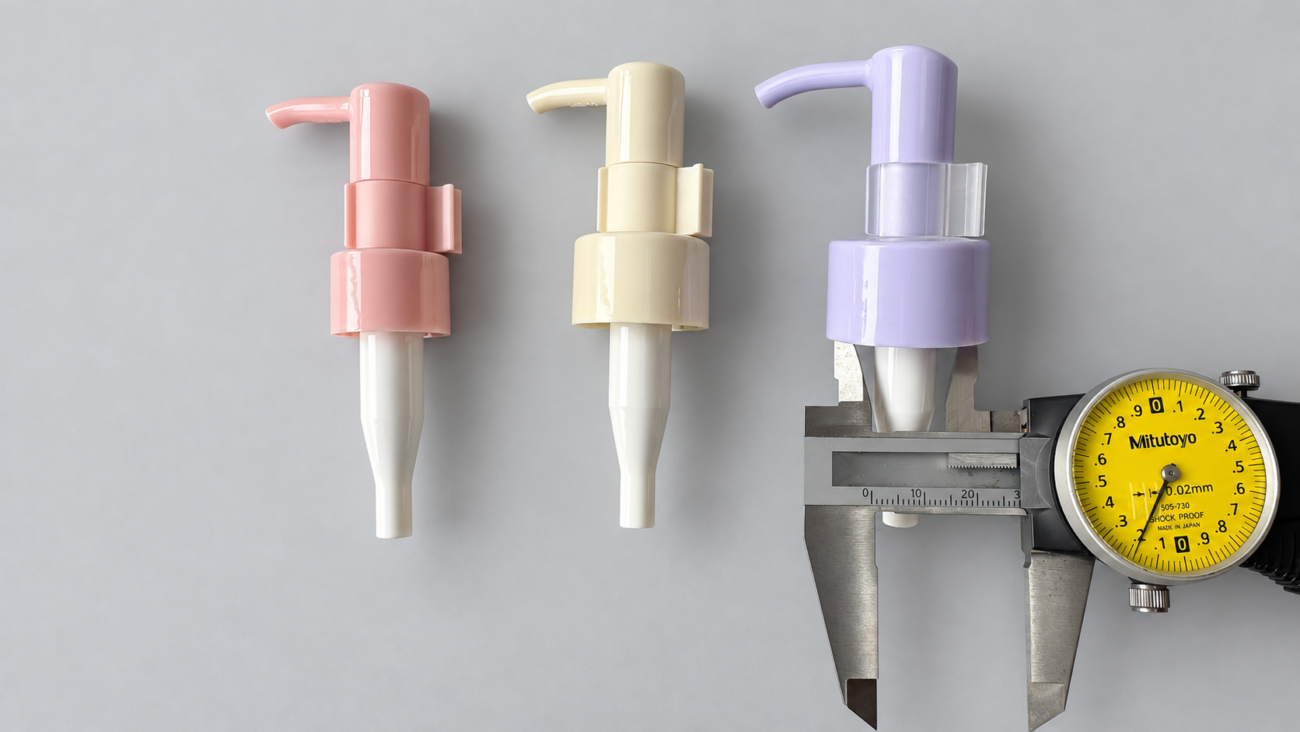
Specify a target output and an acceptable tolerance using the actual formula. Nominal data is a useful starting point, but liquid density, viscosity, actuation speed, temperature, and incomplete strokes can influence measured delivery. Document the test method: number of priming strokes, number of measured strokes, sample count, actuation rate, and test temperature.
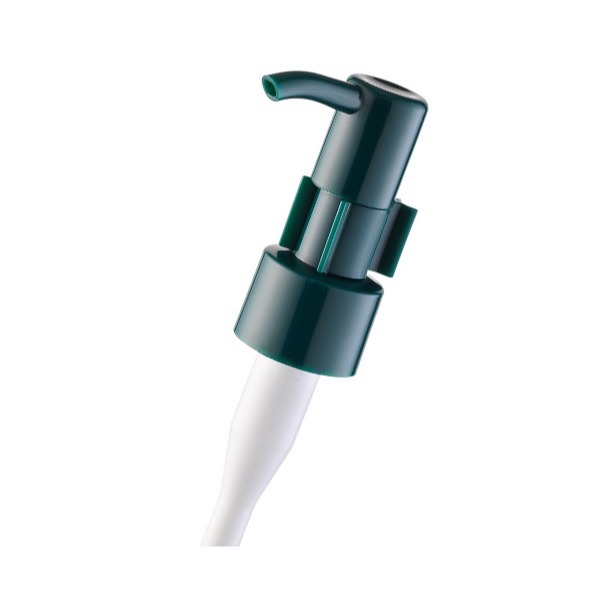
The published 0.9-1.1 ml/stroke range makes the HB-202A a useful candidate for products where approximately one milliliter is a suitable consumer dose. Treat that range as the supplier’s product specification and confirm final output with your own filled-package protocol.
3. Formula viscosity and product behavior
A lotion pump cap has to refill its chamber after every stroke. Formula viscosity affects that recovery, while suspended particles, waxes, volatile ingredients, oils, and surfactants can affect valves, seals, and flow passages. A pump that performs with water may prime slowly or fail to recover with a thick emulsion. A highly fluid cleanser may expose sealing or dripping problems that a cream does not.
Share more than a viscosity number. Tell the supplier how viscosity was measured, at what temperature, and at what shear conditions. Flag particles or shimmer, formula settling, air sensitivity, foaming, stringing, crystallization, and major viscosity changes across the product’s expected temperature range.
For early screening, group the formula as thin, medium, or high viscosity and send representative bulk. For approval, test the final formula after its own stability work. If the formulation changes after pump selection, repeat the relevant tests; a fragrance, solvent, active, or rheology adjustment can change package performance.
4. Actuator shape, force, and nozzle geometry
The actuator is where engineering meets the consumer’s hand. Confirm the head diameter, finger area, stroke travel, actuation force, nozzle projection, orifice, and dispensing direction. A wide head can feel comfortable but interfere with an overcap or secondary package. A short nozzle may deposit product on the collar. An orifice suited to a fluid cleanser may not produce the desired break-off with a richer lotion.
Evaluate actuator options on filled bottles with intended users. Ask testers to operate the package with wet hands, with one hand, and from common angles. Observe whether the bottle tips, whether the nozzle rotates away from the label, and whether residual product dries at the outlet. Aesthetic approval should happen after the functional geometry is set.
5. Locking system and shipping configuration
Most lotion pumps use an up-lock or down-lock mechanism. With an up-lock design, the actuator is raised for use and commonly rotated to lock. A down-lock pump is secured in a depressed position. The right choice depends on shelf presentation, pack-out height, e-commerce handling, consumer opening, and whether the first unlock can release product.
Confirm the shipped position, the rotation direction, the torque or force needed to unlock, and whether an overcap, clip, shrink band, or other secondary feature is required. Then pack and test the pump exactly as it will ship. A design that survives pallet distribution may still need additional protection for parcel networks, where packages encounter repeated drops and varied orientation.
6. Dip-tube material, diameter, length, and cut
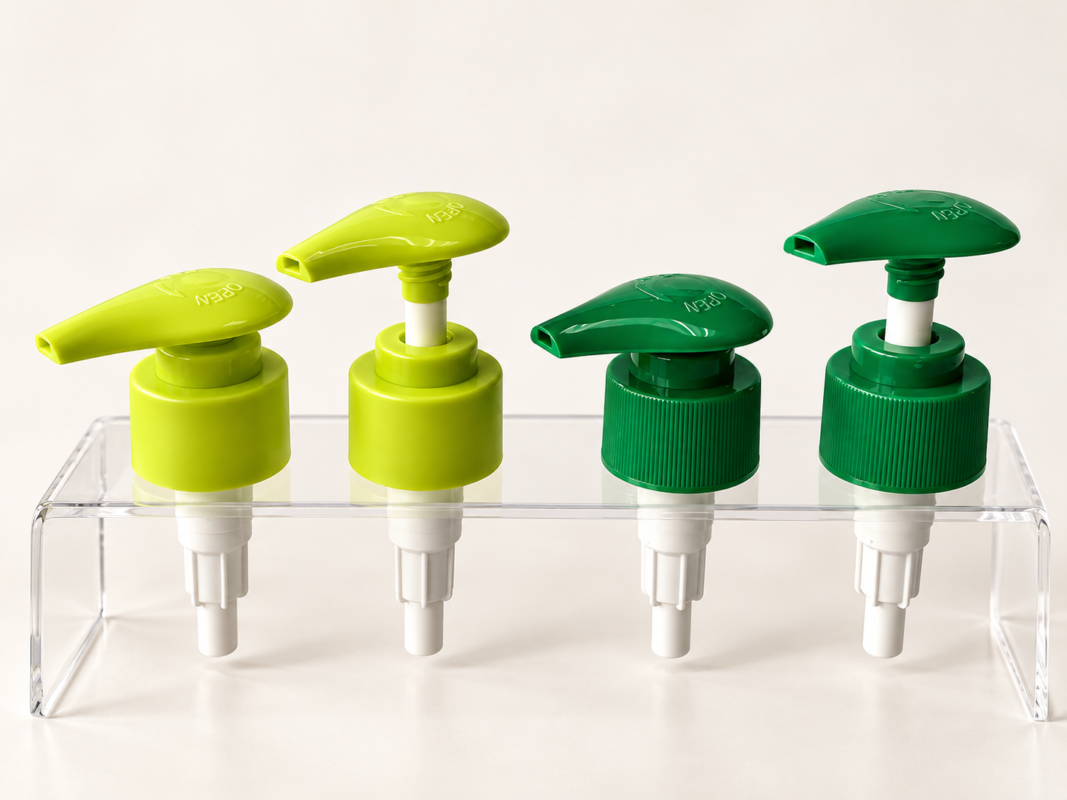
The dip tube must reach the product without sealing itself against the bottle floor. Confirm its resin, inside and outside diameter, total length, curvature, and end cut. A tube that is too short leaves excess product behind. One that is too long may bow unpredictably, press against the base, or make assembly difficult. A straight cut, angle cut, or notch changes the inlet area near the bottom.
Specify how length is measured and from which reference point. Bottle height alone is not enough because the pump engine extends below the neck and the bottle base may be domed, pushed up, or irregular. For a custom length, provide filled-package samples or approved drawings and confirm the supplier’s cut-length tolerance.
Tube clarity and appearance can also matter in clear bottles. Test whether the tube follows the desired sidewall, remains visually unobtrusive, and continues to draw product as the fill level falls. Evaluate performance upright and at realistic dispensing angles.
7. Materials and product-contact components
“PP lotion pump” usually describes the dominant visible resin, not every component. A pump may also contain PE or silicone pistons, elastomeric seals, a metal spring, a glass or metal ball, and an LDPE dip tube. Ask for a component-level material declaration that distinguishes product-contact and non-contact parts.
This is where a technical cutaway is useful. The supplied reference image shows the type of component map a buyer needs: actuator and body resins, piston, seals, spring, ball, and tube identified separately. The final HB diagram should represent a real selected model and be checked by engineering; generic internals should not be presented as the exact HB-202A construction.
Material review should include formula compatibility, colorant and masterbatch, decoration, recycled-content targets, regulatory documentation, and destination-market requirements. If a metal-free product path or recycling claim is important, state that at the beginning of development so the architecture can be selected accordingly.
8. Priming, dose consistency, and product evacuation
Three performance measures reveal whether the lotion pump cap remains convenient through the package life:
- Priming: How many full strokes are required before the first usable dose?
- Dose consistency: Does output remain within the agreed range across repeated strokes and multiple samples?
- Evacuation: How much saleable product remains when a typical user can no longer dispense it?
Also assess re-priming after the package sits unused, especially after storage on its side or after air enters a nearly empty bottle. Track dripping, stringing, sputtering, and actuator return. For foaming cleansers, observe whether the pump introduces unwanted aeration. For richer products, confirm that the head returns promptly and the chamber refills at the intended use rate.
Set measurable acceptance criteria before samples arrive. “Works well” is not an actionable specification. A useful protocol identifies sample quantity, conditioning, orientation, stroke rate, pass/fail limits, and how anomalies will be recorded.
9. Leakage, compatibility, and distribution testing
The final specification is a validation plan. Test the assembled package with the final formula, production-intent decoration, target fill level, proposed torque, and expected pack-out. Include filled-package storage in upright, side, and inverted orientations where relevant. Inspect for leakage, weight loss, discoloration, odor change, corrosion, swelling, cracking, seal softening, and loss of output.
Compatibility work should cover the temperatures and time periods chosen by the brand’s packaging and stability teams. Distribution testing should reflect the actual route: pallet, case, air freight, parcel delivery, or a combination. Retest after transportation because vibration and impacts can loosen or damage a package that appeared sound during static storage.
For broader cosmetic stability planning, teams can consult ISO/TR 18811:2018, Cosmetics – Guidelines on the stability testing of cosmetic products alongside company protocols and the standards applicable to their markets. Supplier guidance supports qualification, but the brand remains responsible for validating its finished package.
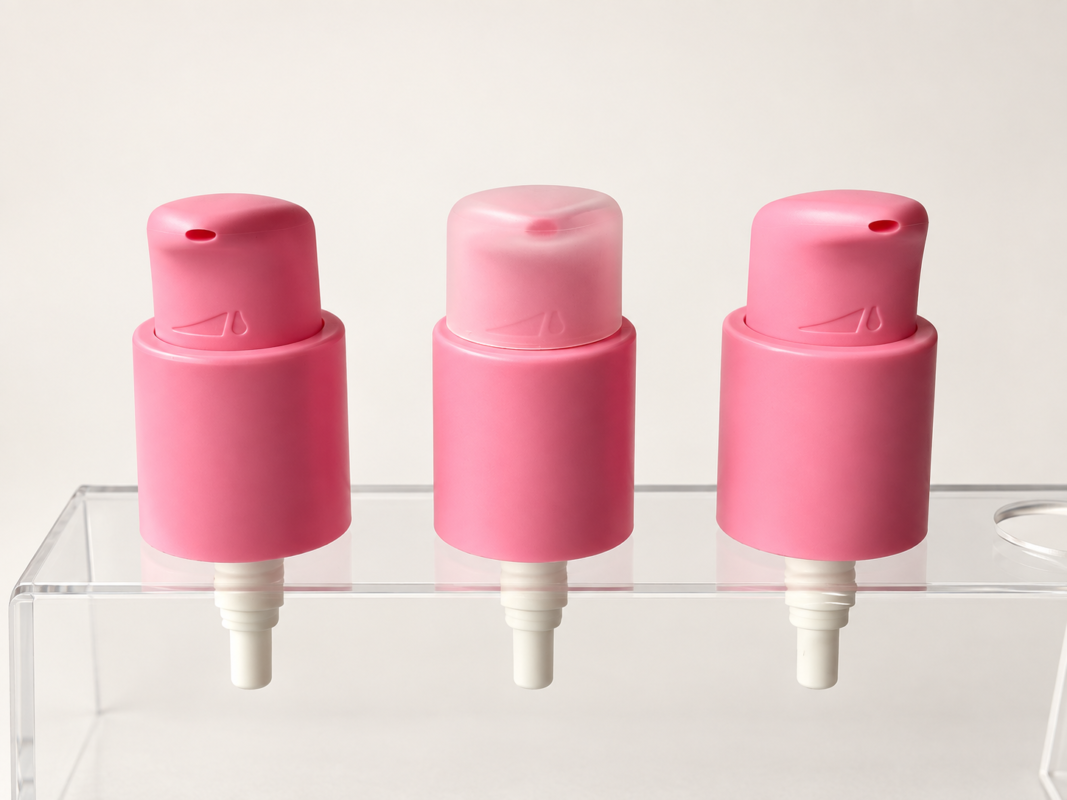
Material review should include formula compatibility, colorant and masterbatch, decoration, recycled-content targets, regulatory documentation, and destination-market requirements. If a metal-free product path or recycling claim is important, state that at the beginning of development so the architecture can be selected accordingly.
What to include in your lotion pump supplier brief
- Bottle sample and technical drawing, including neck finish
- Final or representative bulk formula with viscosity test details
- Fill volume, headspace, and target output per stroke
- Preferred actuator, locking method, color, and finish
- Dip-tube length method and bottle base geometry
- Product-contact and material-documentation requirements
- Filling-line method and target application torque
- Sales markets, shipping route, case pack, and e-commerce needs
- Forecast volume, launch timing, sampling quantity, and test plan
Compare HB Packaging lotion pump options
Start with the neck finish and dispensing requirement, then compare actuator, finish, output, and piston options. The models below provide useful entry points; final suitability depends on sample validation with your bottle and formula.
| Model | Neck Finish | Best Next Step |
|---|---|---|
| HB-202A | 20/410 | Review 0.9-1.1 ml/stroke option and actuator choices |
| HB-205A | 20/410 | Compare styling and formula requirements |
| HB-203D | 24/410 | Check against a production-intent 24/410 bottle |
| HB-203C | 28/410 | Evaluate for larger-format personal-care packs |
| HB-204C | 28/410 | Compare actuator and finish options |
Browse the full lotion pump collection to shortlist standard models. If a standard option cannot meet the industrial design or performance brief, discuss custom molding and packaging development before locking the bottle design.
Frequently Asked Questions
Q What is a lotion pump cap?
Q How do I choose the correct neck finish for a lotion pump?
Q What output per stroke should a beauty brand select?
Q Can one lotion pump work with every formula?
Q What should I send a lotion pump supplier?
Qualify the pump before production
Send HB Packaging your bottle, formula profile, target dose, finish requirements, and distribution plan. The team can help shortlist lotion pump cap samples for fit and compatibility testing.
Catch the packaging decisions your competitors are already making.
One practical brief each month on closure specs, compliance shifts and sourcing mistakes, before they turn into samples you have to redo.