Plastic Bottle Closures: 3 Clues in a Leaky Unboxing

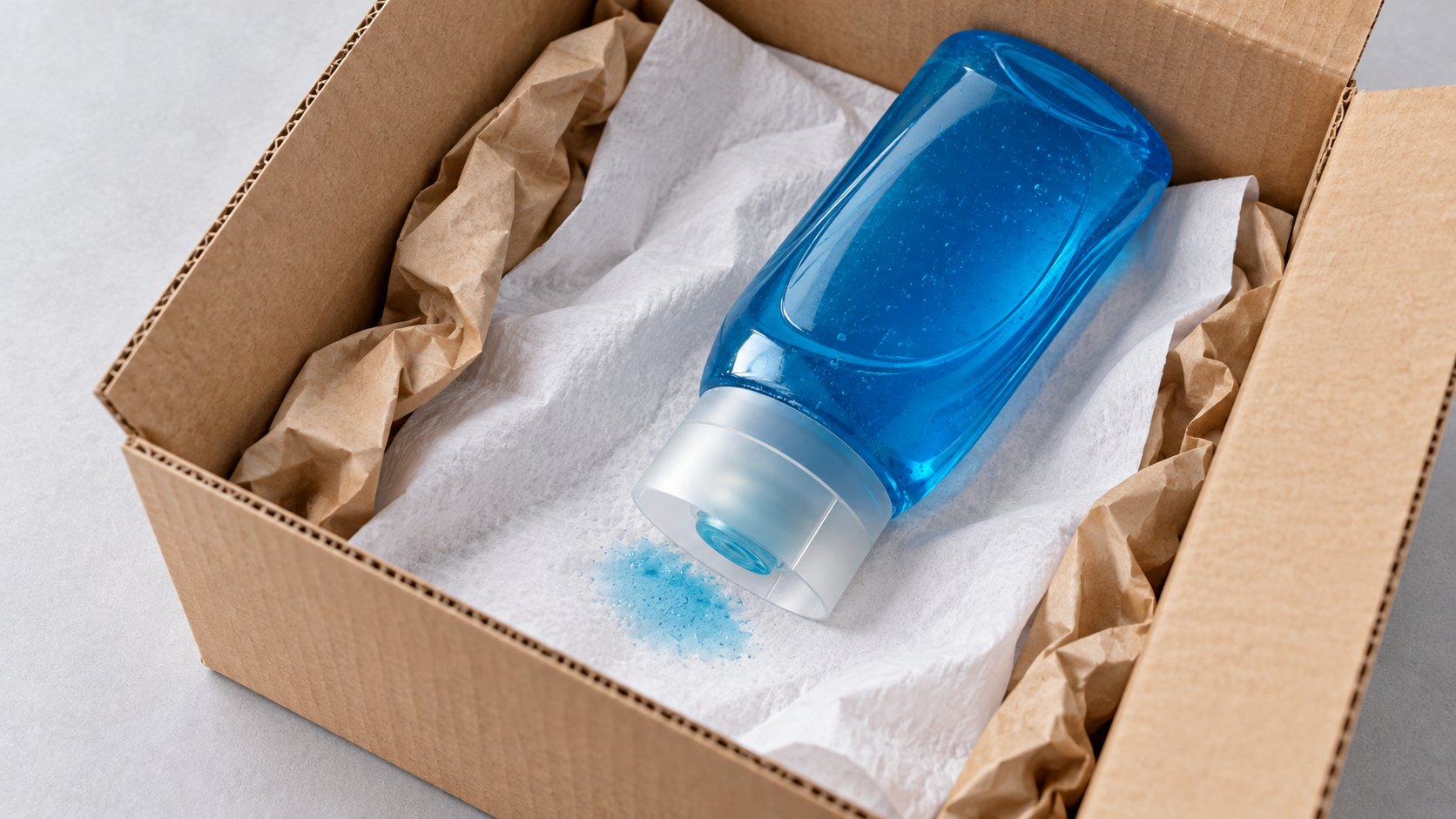
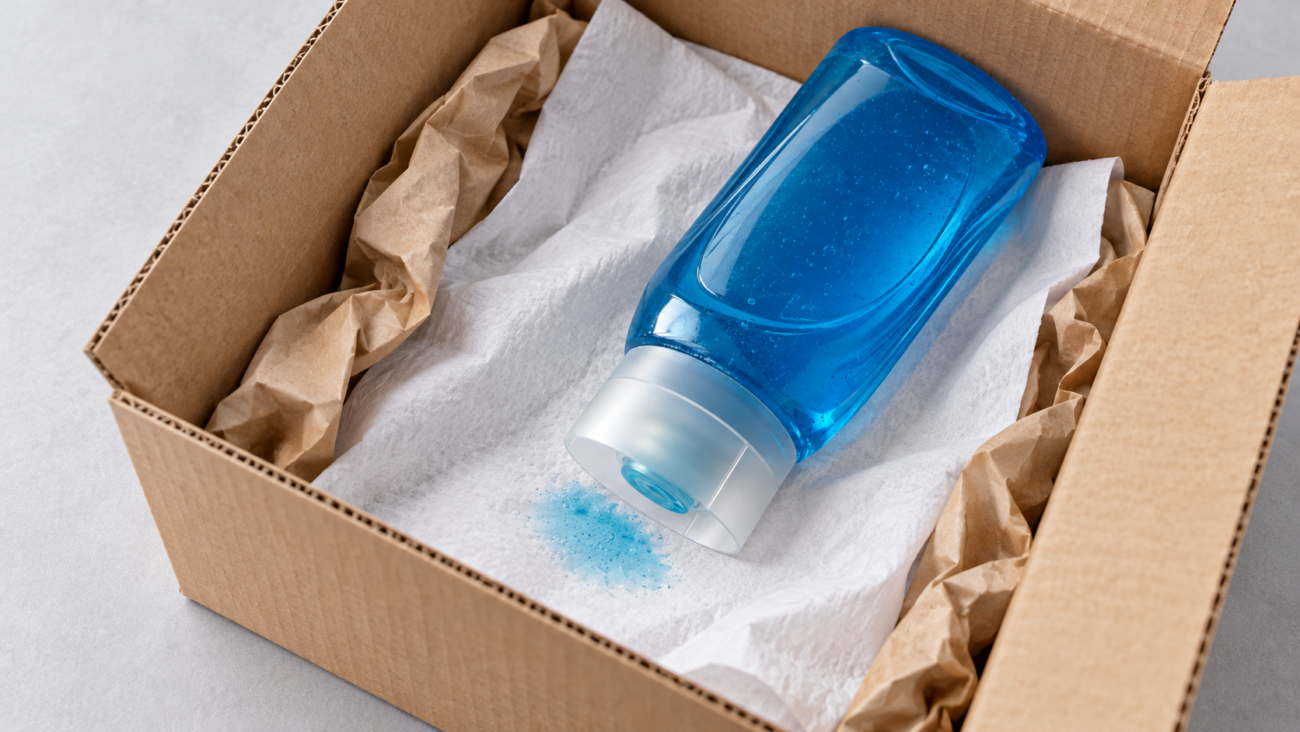
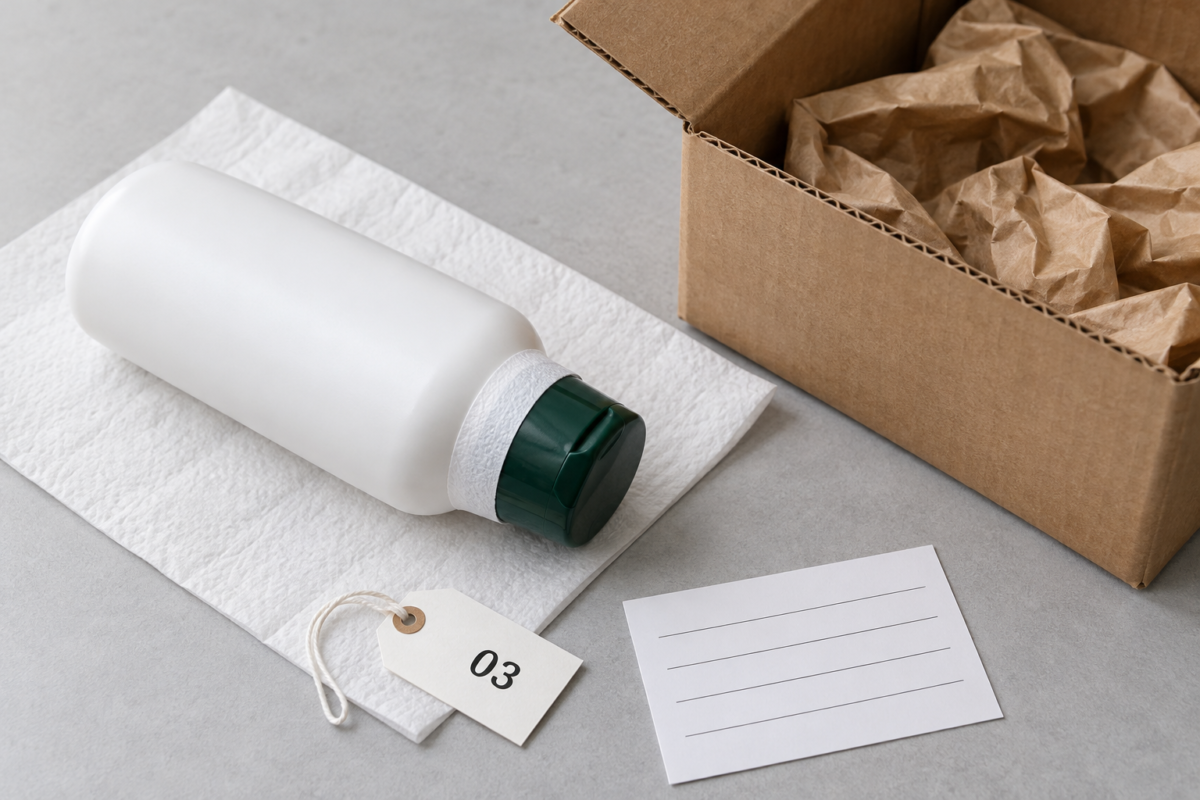
A staged beauty-parcel demonstration: visible residue near the closure is a clue, but it does not identify the leak source by itself.
The first impression is a damp box
A customer orders a new shampoo. The outer carton looks normal. Inside, the tissue is damp and the bottle feels sticky. Did the cap leak? Maybe. But a photograph of the mess alone cannot tell you whether liquid escaped at the neck, through the dispensing opening, or from a damaged bottle.
For a beauty brand, that distinction matters. The next sample round should fix the actual failure, not simply add a tighter cap or more packing material.
Plastic Bottle Closures: Follow Three Leak Trails
Start where the product is wettest. These are possible paths, not diagnoses; residue can move inside a box after the original leak.
01 / Neck
Liquid around the bottle-closure seam
Look for a wet ring below the cap skirt or residue in the threads. The full neck finish, sealing surface, assembly torque, and actual formula all deserve inspection. A cap labeled "24 mm" is not proof of a proper fit with every 24 mm bottle. HB's neck-size guide explains why the finish matters beyond diameter.
02 / Opening
Product at the dispensing point
A clean neck with product near a flip-top opening or nozzle points to a different question: did the dispensing feature stay closed under handling and compression? Check the closure in the exact configuration shipped, including any seal or transit protection. For format differences, see HB's flip-top, disc-top, and push-pull comparison .
03 / Elsewhere
The cap may not be the source
Inspect the bottle shoulder and base for cracks or scuffing, and note whether another item in the parcel is wet. A stained cap can simply be where escaped product collected. The complete filled pack needs investigation before changing the closure design.
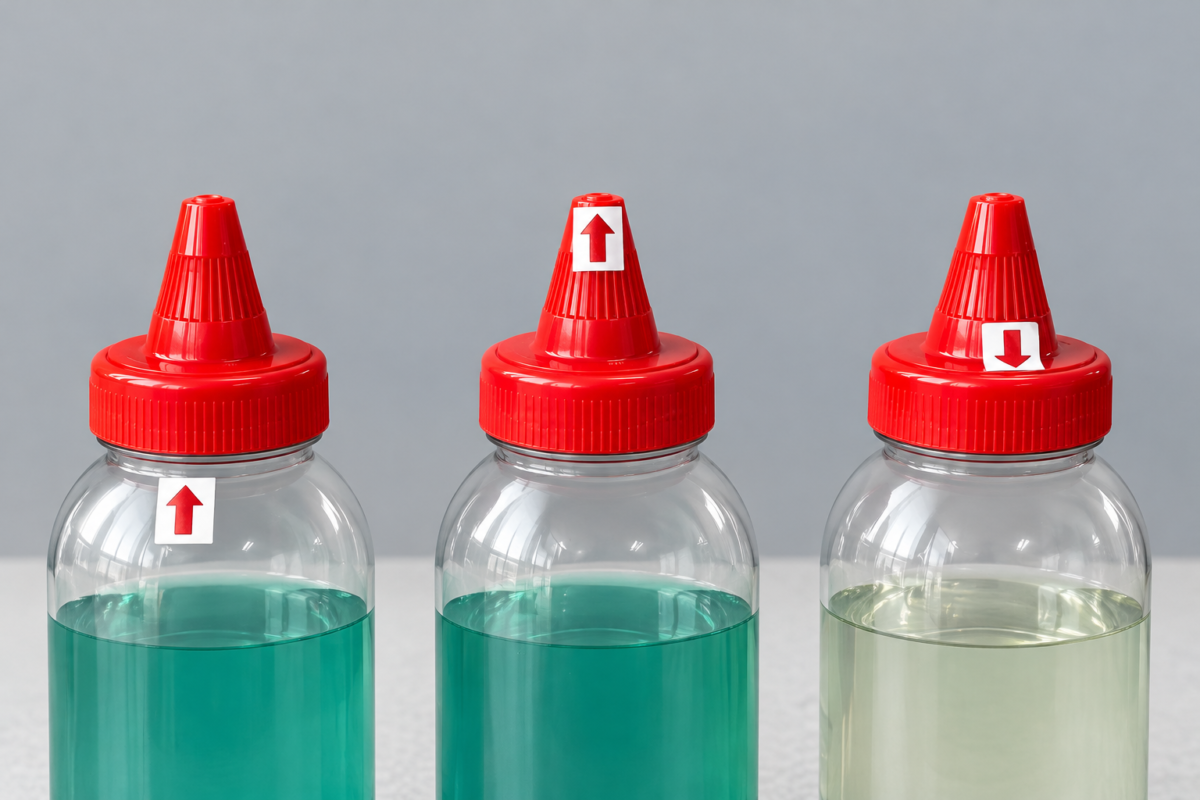
A staged comparison of nozzle-closure positions. Record the closure’s shipped position when investigating product found near the dispensing opening.
What the stain can tell you
| What you see | First place to inspect | What not to assume |
|---|---|---|
| Residue under the cap skirt | Neck finish, seal surface, and assembly | That extra tightening alone will solve it |
| Product near the flip-top or nozzle | Dispensing opening and shipped closed position | That the neck seal failed |
| Wet carton with a clean closure | Bottle damage and other packed items | That the cap caused the spill |
Test the parcel, not just the cap
Build a trial shipment with the production bottle, final formula or an appropriately matched test fill, chosen closure, and actual retail packing method. Photograph it before packing and after a controlled handling simulation. Record fill level, application method, closure position, and where the first visible residue appears. A simple tissue-wrapped demonstration makes a useful internal comparison, but it is not a substitute for a formal transport test.
ISTA’s 3L overview describes hazards in retailer fulfillment for products shipped in their own containers. Other parcel configurations may call for another procedure; select a test with a qualified packaging lab for the specific channel. Neither a clean demonstration nor an empty-container seal test proves that every filled beauty parcel will arrive dry.
Plastic Bottle Closure FAQs
Can a plastic bottle closure leak even when the neck diameter matches?
Yes. A nominal diameter such as 24 mm does not define the complete neck finish. The thread profile, sealing surface, dimensional tolerances, bottle, closure, formula, and assembly conditions must work together.
Will applying a plastic bottle closure more tightly stop a leak?
Not necessarily. More application torque may not correct an incompatible neck finish or damaged sealing surface. Excessive torque can also deform components or make the package difficult to open.
Which shipping test should a beauty brand use for liquid bottles?
The appropriate procedure depends on the packaged-product format, weight, distribution channel, and whether it ships in its own container or inside another parcel. A qualified packaging laboratory can identify the relevant protocol and test the production-representative filled pack.
A clean first open is the goal
Plastic bottle closures are one part of a package the customer experiences as a whole. Trace the leak, test the filled bottle in its real shipping configuration, and change the component that the evidence actually points to. That gives the next customer a better chance of opening a product, not cleaning one up.
Working on a beauty bottle for US delivery?
Share the bottle neck drawing, formula type, closure idea, and shipping setup. HB Packaging can discuss relevant closure samples for your testing plan.